Short Pause or Continuous Flow? How Concert Transitions Shape a Show’s Dramatic Arc
Concert transitions shape a show’s dramatic arc. Learn how pauses, spoken links, and musical handoffs frame a set’s story without flattening each song.

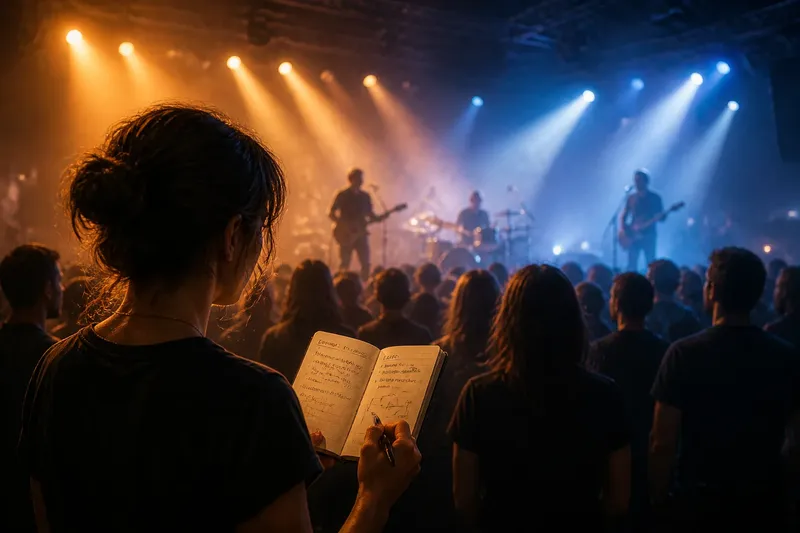
At a small theater show, the singer finishes a hushed song and steps toward the microphone stand. The drummer reaches for a water bottle. In that ordinary moment, a concert transition can make the next song feel like a fresh scene, a continuation, or a deliberate change of subject.
Concert transitions are not only pauses or overlapping notes. They also include spoken remarks, lighting shifts, instrument changes, and the way a performer moves across the stage. For critics, the useful question is how those choices shape the show’s larger dramatic arc—not simply whether the set keeps moving.
Transitions give a set its scene changes
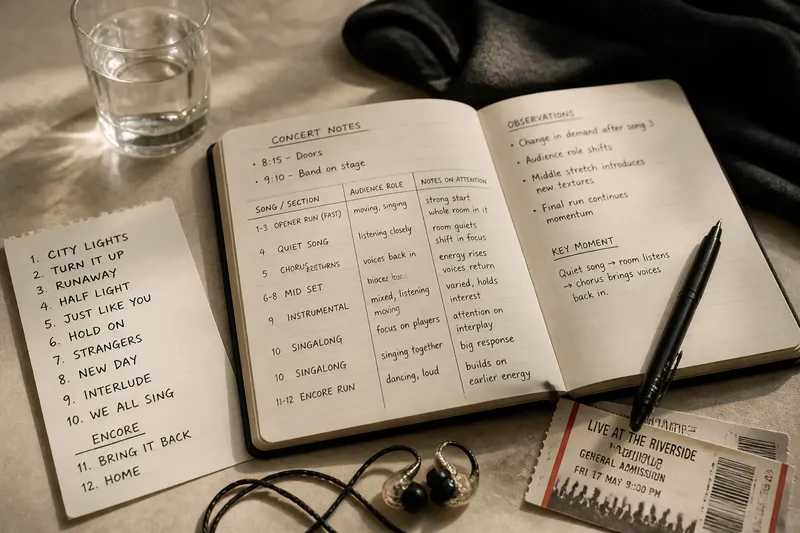
A set list puts songs in sequence, but the transitions tell listeners how to read that sequence. A quiet song followed by an upbeat one might suggest release after restraint. A story between them might instead make the upbeat song feel like a reply to what came before.
Those connections need not be elaborate. A band can establish a recurring thread through a repeated phrase, a change in stage position, or a consistent lighting cue. The choice works when it gives the audience a way to hear the set as more than a row of unrelated tracks, without forcing every song into one tidy narrative.
Notice what the transition adds to the sequence, not just how quickly the next song starts.
Spoken links can frame a song without explaining it away
A brief introduction can change how a song lands. A performer might name the place that inspired a lyric, dedicate a song to someone, or make an unexpected joke before a solemn piece. The words create a frame, but the delivery matters too: a long explanation can crowd the song, while a simple remark can sharpen its emotional context.
Silence can carry framing as well. A performer who lets applause settle before beginning may preserve a song’s sense of separation. A quick instrumental phrase after the applause can instead draw listeners into the next piece without asking them to interpret a speech.
For a critic, describe the link and its placement. Avoid claiming that every listener understood the remark in the same way.
Stagecraft can connect songs without extra sound
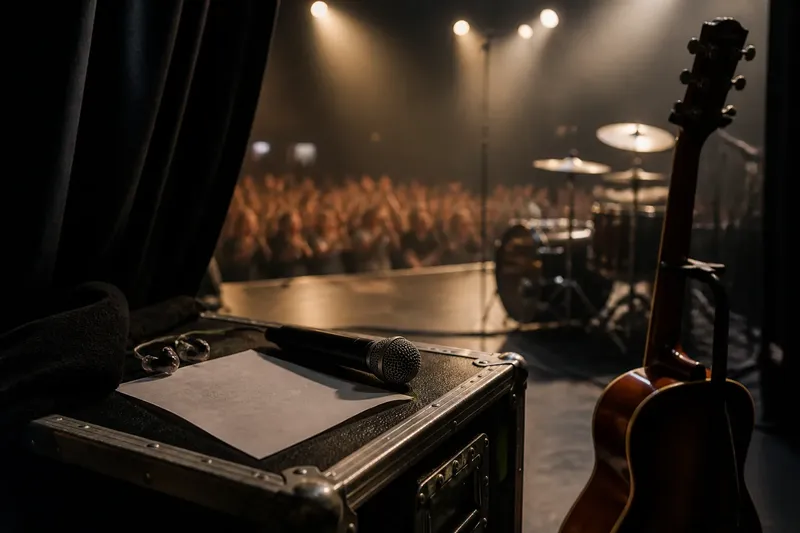
Lighting, movement, and instrument changes can make a transition legible while the stage is quiet. A wash of color might shift as the band changes mood. A guitarist moving to a keyboard can signal a new texture before a note is played. These choices are especially noticeable when the performers keep them purposeful rather than treating every gap as something to conceal.
They can also expose practical limits. A complicated instrument change may interrupt the set’s momentum, while a crew member’s visible work can become part of the audience’s view. That is not automatically a flaw; the question is whether the transition fits the performance’s character or draws attention away from it.
Describe what changed onstage and what the next song inherited from that change.
A worked example shows how a transition can frame a set
Imagine a three-person folk band has just played a song about leaving home. The next song, about returning, begins with the same guitarist switching from acoustic guitar to a small keyboard. The band must choose whether to let the change happen quietly, speak about the shared theme, or make a musical link.
In this invented situation, the band chooses a short spoken line: the singer says the next song follows someone coming back, then waits while the guitarist takes position. The observable result is a clear thematic bridge, while the instrument change remains visible and the returning song gets its own opening. The tradeoff is that the line makes the connection explicit; listeners have less room to discover it without guidance.
If the band instead used a recurring melody between songs, the link might feel more musical but require listeners to recognize the repeated phrase. If it said nothing, the sequence could remain more open to interpretation, but the shared theme might be less apparent. Each option creates a different relationship between performance choices and the set’s story.
What should a critic listen for in concert transitions?
How does a transition connect songs in a set?
Look for a repeated sound, image, subject, or stage gesture that carries from one song to another. Then describe whether the link feels explicit or leaves room for listeners to make their own connection.
When does stage banter help a song?
Banter helps when it adds context or changes the mood in a way the following song can use. Note whether the words prepare the audience, distract from the music, or establish a contrast.
Can a quiet gap still be part of the performance?
Yes. A pause can preserve a song’s ending, make room for applause, or let a visible change of instruments become part of the scene. Describe what happens in the gap before deciding whether it feels intentional.
How can a reviewer avoid guessing what the audience felt?
Report observable details such as applause, a lighting shift, a repeated melody, or a performer’s remark. Explain how those elements frame the next song without assigning one shared reaction to everyone in the room.
Use observable details to describe the show’s shape
A useful review names the transition’s concrete ingredients: a spoken link, a change in lighting, a repeated phrase, a musician moving to another instrument, or a pause that leaves applause exposed. Those details support a clear account of how the set’s dramatic arc develops, without turning interpretation into a claim about every listener’s response.
For instance, a critic might write that the singer connected two songs about leaving and returning, then note how the keyboard entrance changed the texture. That tells readers what the performers did and how the sequence was framed. It also leaves room to disagree about whether the connection felt subtle, heavy-handed, or unresolved.
When you write about concert transitions, follow the thread from the choice onstage to the song that follows. A small gesture can frame a whole set, but the next song still has to make that connection audible.