Before the Encore: How the Return Became a Concert’s Closing Gesture
Learn how the encore’s familiar exit-and-return ritual shapes a concert’s final scene, and what to listen for when the musicians come back.
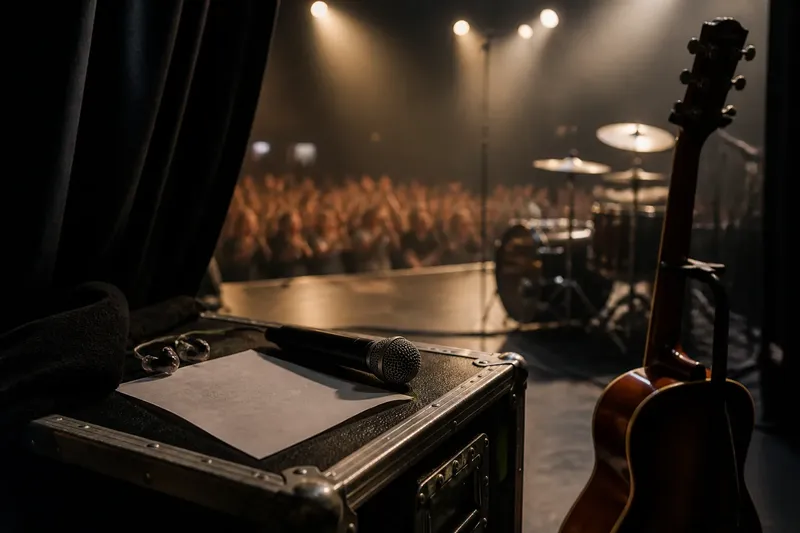
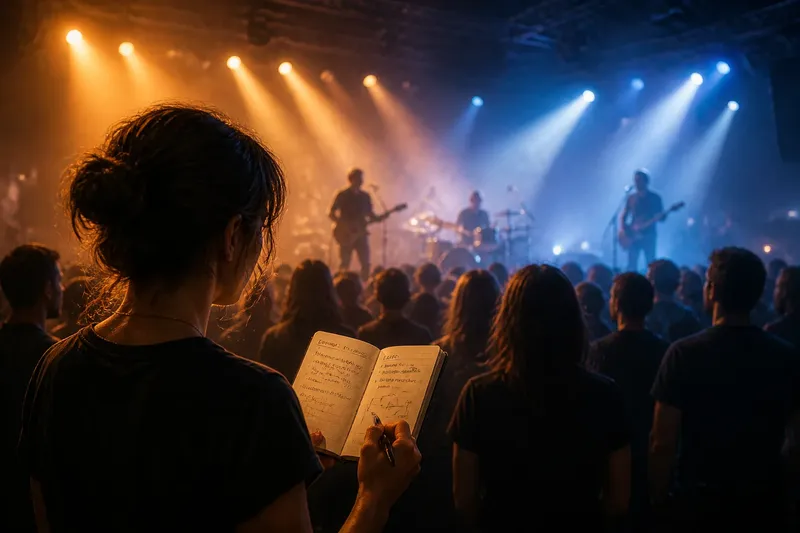
The house lights stay low as the last chord fades. A drummer sets down a stick, the band leaves, and applause keeps rolling through the room. The encore—the music that follows an apparent ending—makes that return feel like a new scene, even when everyone expects it.
What does “encore” mean at a concert?
“Encore” is a French word meaning “again.” In concert use, it names music performed after the main program appears to have ended, often following applause or calls from the audience. The word describes both the additional performance and the exchange around it.
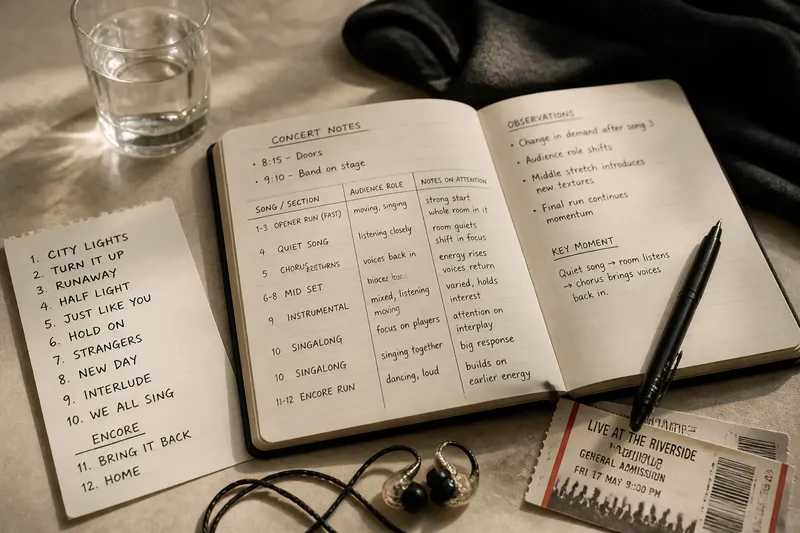
That exchange gives the encore its distinctive shape. The performers leave, the audience responds, and the musicians reappear. A song played without that departure may be an extra number, but it does not create the same small drama. The audience has watched an ending, then takes part in reopening the show.
Concert customs vary by room, genre and occasion. An encore is a convention, not a universal rule: performers can honor it, reshape it or decline it.
The encore’s history has no single settled starting point
It is tempting to trace the encore to one place and moment, but the custom’s history is not captured by a single origin story. The word has French roots, while the practice of repeating or adding music after an apparent program ending has taken different forms across performance traditions. Without a reliable, specific historical source, it is better not to assign the custom a precise birthplace or chronology.
What listeners can recognize is the social logic behind the ritual. An audience’s response can prompt a performer to repeat a passage or offer another selection. In some settings, a return may be expected; in others, it may be unusual. The meaning depends on the room and its conventions, not on a universal account of how the practice began.
For a concertgoer, the important history is often the one unfolding in the venue: a clear ending, a response from the crowd and a possible return. Listen for those cues rather than assuming every encore follows the same old script.
Why do performers leave before coming back?
The brief exit makes the ending legible. A final song alone can be ambiguous: is the set over, or is another number coming? Leaving the stage answers one question while opening another. The audience sees the announced portion conclude, then has a chance to respond.
That pause also shifts who seems to control the close. During the main program, performers lead the sequence. At the threshold, they wait offstage while the audience’s sound carries the moment. A return can feel like a response, even if the musicians have already planned what they will play.
The separation need not be long. A quick walk into the wings can create the ritual, while a longer absence may let attention drift. What matters is whether the exit, response and reappearance register as connected parts of the same exchange.
Is an encore really spontaneous?
Sometimes a performer chooses an extra song in response to the crowd; often, the return and its music are prepared in advance. A planned encore is not necessarily a false one. A familiar cue can still prompt a real reaction each time it happens.
What matters to listeners is how the moment is presented. If the band disappears for a pause, then returns to a song that fits the night, the audience may experience the reappearance as a reward. If the exit feels like a mechanical interruption, the same convention can seem perfunctory.
Imagine a small venue where a singer ends the announced set with a quiet ballad, thanks the crowd and leaves with the guitarist. The applause builds, and they return without the rest of the band for a stripped-down song. The changed arrangement gives the return a distinct sound, even if the musicians chose the song before the doors opened.
Why has the encore become a separate closing gesture?
The encore gives a concert a second ending. The main set can resolve its central arc, while the return offers a short coda: one last image, a contrast in mood or a familiar song that sends the crowd out with something to carry. It is not simply extra time. The boundary changes how the final music is heard.
That separation can make the last song feel more personal. A performer may return alone, bring out a guest, revisit an early tune or choose a number that would have felt out of place in the main sequence. The music sits outside the planned program, at least in appearance, and that distance gives it a different weight.
The convention can also help clarify a set’s shape. A clear exit marks the main program’s end; a return then offers a distinct final gesture rather than blurring the sequence.
When does an encore feel earned rather than obligatory?
An encore feels earned when the return changes the room’s attention, not merely its song count. The audience should be able to hear why this music comes after the apparent ending. It may bring intimacy after a loud finish, release after a tense closing number or a final burst of energy after a restrained set.
It can feel obligatory when every show follows the same visible script and the return adds no new shade. That does not make the music worthless, but it can weaken the sense that the audience’s response mattered. A deliberate choice—whether to return, what to play and how to re-enter—keeps the gesture from becoming a formality.
- The exit: If the performers leave clearly after the main program, read the boundary as intentional; if they remain onstage, treat the next song as part of the set instead.
- The audience’s response: If applause has room to gather before the return, hear it as part of the exchange; if the musicians return immediately, notice how that quick cue changes the pause.
- The reappearance: If the return shifts the room’s focus or mood, notice what changed; if it does not, consider whether the encore functions mainly as a familiar ritual.
- The song choice: If the final music adds a distinct feeling or perspective, hear it as a coda; if it repeats the set’s existing mood, listen for how the performers make that continuity purposeful.
- The arrangement: If a familiar song arrives in a different arrangement, notice what the change brings forward; if it sounds much like its earlier version, consider whether its placement alone gives it new meaning.
- The closing signal: If the performers make their final departure clear, take it as the end of the concert; if the ending remains ambiguous, wait for the room’s cues rather than assuming another return is due.
These are listening prompts, not rules. A quiet, brief encore can be more convincing than a grand return if it gives the evening a fitting last note.
What happens if a performer skips the encore?
Nothing is missing by definition. A concert can end decisively with its last announced song, and some performers prefer that unbroken close. Others may leave without returning because of the show’s format, timing or circumstances. The absence of an encore does not tell listeners whether the performance succeeded.
It does change the audience’s role at the end. Without the staged departure and return, applause follows the final song rather than prompting another scene. The close may feel sharper or more ambiguous, depending on how clearly the performer signals that the program is finished.
For listeners, it helps to hear the encore as a convention rather than a debt. Applause can express appreciation without becoming a demand, and a direct ending can be an artistic choice rather than a rebuff.
Does every return need to be a surprise?
No. The encore’s appeal does not depend on fooling the audience into believing the show is over forever. Many listeners know the band will probably return, and the pause still matters because it separates the main program from its final gesture.
The convention works through shared understanding. Performers signal an ending; the audience answers; the return acknowledges that answer. Even when the sequence is familiar, its feeling comes from the particular room, the response in it and the music chosen for the last appearance.
Next time the lights remain dim after a final chord, listen to the space between departure and return. That pause lets you hear whether the encore acts as a response, a coda or simply the concert’s chosen last song.