A First Concert, Listened to in Three Passes
A first concert feels easier to follow when you listen in three passes: notice the opening, track one performance change, and keep a detail to remember.
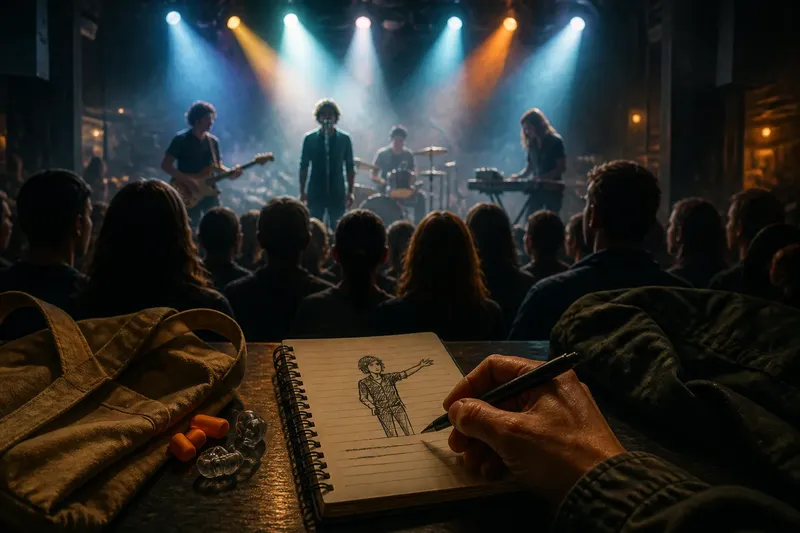
The lights dim, a stranger near you cheers, and the band walks on. At a first concert, it can be hard to know where to look or listen. A simple plan helps: notice how the performers enter, choose one stage action to follow, then keep a small detail for the trip home. You do not need to know the songs or understand every choice.
Think of the three passes as permission to focus, not assignments to finish. If a moment surprises you, stay with it. The show is not a quiz, and you are free to enjoy it without turning every song into an interpretation.
Notice how the performers enter
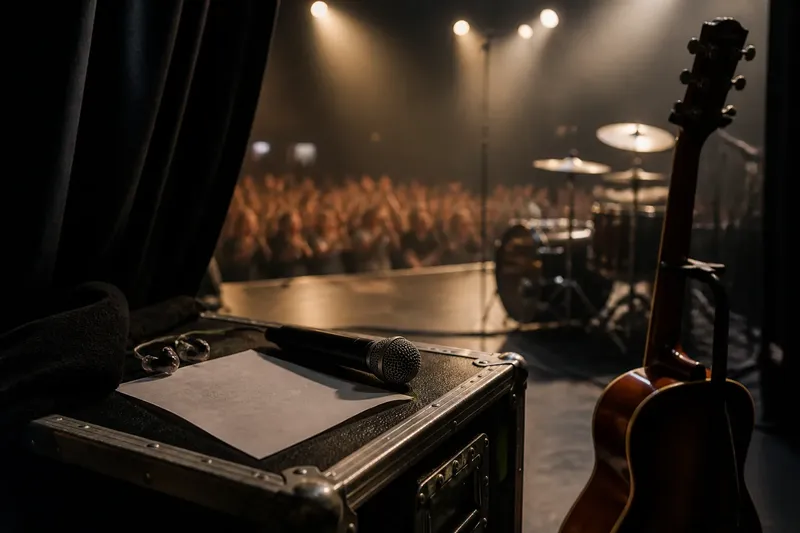
At the start, watch how the musicians take the stage. One band may begin together; another may open with a single voice or an instrumental passage. Notice the first action that catches your eye: a drummer raising a stick, a singer stepping to the microphone, or a keyboardist waiting for the room to quiet.
Then look at what happens between the stage and the audience. Some people may sing right away. Others may wait for a familiar melody or simply watch. You do not have to judge whether the entrance is exciting. Just notice what the performers do and how the room responds.
If you are still taking off your coat or finding your spot, let that be part of the evening. There is no need to reconstruct the opening later. Begin listening whenever you are ready.
Pick one visible action, then give yourself permission to stop tracking it.
Follow one stage action for a while
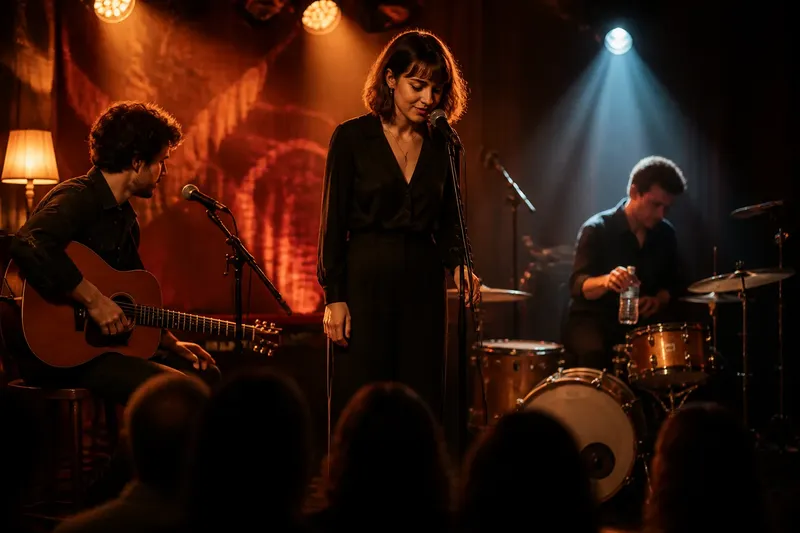
Once you have settled in, choose one person or action to watch. You might follow the singer’s gestures, notice how the drummer cues a transition, or watch the bass player turn toward a bandmate before a song changes direction. This is different from trying to identify every musical detail: you are simply giving your attention one place to rest.
Notice what happens next. Does the singer move away from the microphone when the band joins in? Does a musician signal a change with a glance or a raised hand? These choices can make the performance feel close, playful, or more forceful, though your own response may be something else entirely.
Say you arrive at an invented concert where a singer stands still through a quiet verse, then crosses the stage as the drums enter. First, you notice the stillness; next, you watch the singer cross as the sound grows; then you see the audience turn toward that side of the stage. Your answer is not a verdict on the performance. You might simply feel that the song has opened up, while giving up the chance to follow the drummer’s movements at the same time.
If your chosen action disappears, choose another or stop watching for a while. A musician may leave the stage, or the whole band may draw your attention. There is no need to keep a running account.
One person, one action, and one moment of change are enough to follow.
Keep a small detail for the way home
As the set continues, let your focus widen. You might remember a bandmate looking across the stage before a song begins, an audience member calling out a request, or the brief silence after a song ends. These are details of a shared event, not clues you have to decode.
The detail can be small. Maybe the crowd claps in time, or a performer waits for the room to settle before speaking. If no single moment stands out, keep a general impression instead: the room felt restless, welcoming, loud, or still.
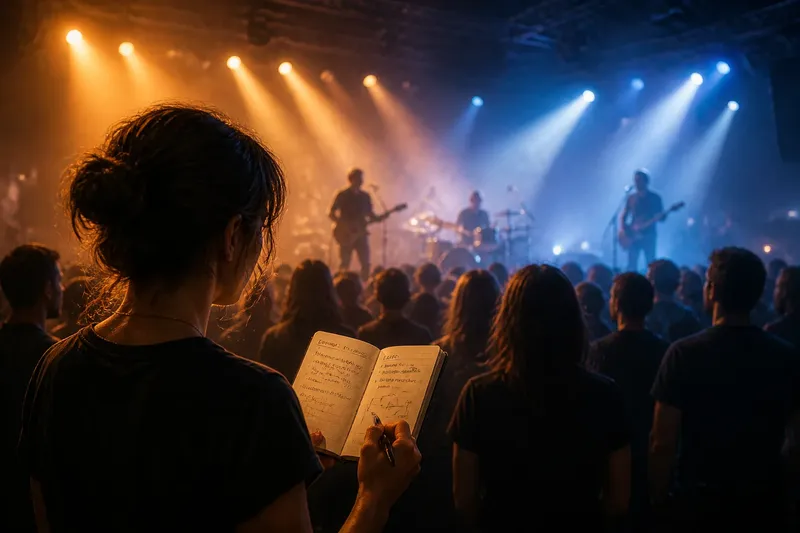
If you want to remember the evening, jot down a few words once you are outside the busiest part of the venue. “Singer waved from the side of the stage” is enough to bring back a scene. You can also leave the phone in your pocket and let the memory be imperfect.
Choose a detail you can describe plainly, not one you think a concertgoer is supposed to remember.
What should you do when attention wanders?
What if I do not recognize any songs?
Watch how performers communicate with one another or with the audience. A hand signal, a pause before a song, or a spoken introduction can give you something to follow without knowing a title.
What if I cannot see the stage?
Listen from where you are and notice the room’s response. If you can move to an open spot without pushing past anyone or blocking a view, do so calmly; otherwise, there is no need to force a better sightline.
What if I keep checking my phone?
Pick a song or moment to put it away and return your attention to the room. If you need the phone for a practical reason, handle that first rather than worrying about the listening plan.
What if nothing sticks in my memory?
That does not mean you listened badly. You can remember a broad impression, such as the room becoming quieter when the singer spoke, or simply accept that the evening felt good without saving a particular scene.
Adjust the plan to the room
A late arrival, a conversation, or a need to step outside can interrupt any plan. If you miss the entrance, start by watching one stage action. If you leave for a break, return when you are ready instead of trying to piece together what happened in your absence.
Your comfort matters more than keeping your attention onstage. If the sound feels painful, use suitable hearing protection or move farther from the speakers when possible. Take a break if you need one. For personal concerns about hearing or health, ask a qualified professional.
If you are attending with someone, agree on a meeting place before the room gets crowded. That way, you can spend less time looking for each other and more time watching the show.
Let a first concert leave room for surprise
The entrance gives you a simple way into the performance. Following one stage action can help you notice how musicians share the work, while a small remembered detail gives you something to describe later. None of those observations has to become a review.
A first concert is easier to follow when you let your attention move naturally: notice the entrance, watch one action, and keep a detail if one stays with you. The search phrase “first concert” can point you toward listening ideas, but you do not need a special method to belong in the room. On the way home, try naming one thing a performer did, even if your answer is simply that they waited for the crowd to finish singing.